U.S. Mangalarga Marchador Association (USMMA)

Blog

  • Marchadors & Dressage, a letter to the USDF

    From Alessandra Deerinck:

    A few months ago, with the support of some other people have written a proposal to USEF/USDF to officially open the discipline of dressage to gaited horses by introducing separate classes to judge them.
    What do you think?
    I am looking for suggestions and more support.  Contact me: Alessandra Deerinck DVM hhsensing@Icloud.com ph: +1 760 715 1554

    Here is the document that is in the hands of USEF and USDF and will be submitted to the rules committee:
    To whom it may concern at USEF/USDF

    Overview
    Currently, horsemanship – the interaction between horse and human – is evolving at a fast pace and in a direction that considers the welfare of the horse more than previously.
    The present culture has created a strong awareness for the welfare of the horse. People are being held accountable for how they interact with their horses in obtaining the performance they seek. Horsemen and their horses reflect the culture of the community they live in. It is up to the individual to establish values, and conventions that are ethical and humane, to benefit us, and the creatures with whom we share our lives.
    Like many other countries, the United States of America was developed through the work of our ancestors with the cooperation of domestic horses to transport armies, workers, merchandise or mail. While the use that man makes of the horse has taken many connotations, it is interesting to note how the horse’s behavior towards man has never changed over time, and the classical rules of horsemanship remain valid. Because it is no longer necessary to use horses as work instruments, people who opt to have one in their life freely choose to do so, and do it for pleasure.
    Over time some human beings were allowed to distort the meaning of locomotion into a theatrical act, altering the natural gait of the some horses by introducing practices that are abusive and unethical. Unfortunately this became an accepted practice in the United States of America, and is still a common image that people picture when they hear the words “gaited horse”.
    Some organizations, like FOSH (Friends of Sound Horses) have been active in the support of the efforts of the USDA to eliminate the barbaric practices of the breeds identified in the Horse Protection Act. Because of these practices, all gaited breeds and gaited horses carry a stigma. Now it is time for a change. Support from the USEF/USDF, provided by giving a space for healthy and sound performance to the gaited horses, can be extremely beneficial.
    True gait is scientifically proven to be part of the genetics of a horse (genetic research done on DMRT3 is one example). Scientific studies have found equine genetics to be so strongly defined, and efficient, that the equine species has always been able to adapt to the times it lived in, and can also revert to its wild state, if given the opportunity, and the right natural setting. True gait is natural, performed from birth, but can be deeply influenced by the interaction between human and horse. This is one reason for which it is important to give riders healthy guidelines to regulate equestrian sports.
    A horse with a breed specific gait is different from a horse that has the three traditional gaits (walk, trot and canter) only by the way it moves.  Gaited horses provide a smooth comfortable way to move on horseback and are an asset to the equestrian community. Because of the comfort of their smooth gait, gaited horses have proven to be exceptional athletes in endurance as well as to benefit to many younger, older or impaired riders who can continue to ride.

     
    The Request– The creation of dedicated classes for gaited horses at USDF/USEF shows

    Currently, because gaited horses do not trot, they are not acceptable in the discipline of Dressage as defined by the FEI.
    The following are our supporting reasons for our request:
    – Gaited Dressage is of interest to many owners of gaited horses. Although a small percentage of the equestrian world, there are many riders of gaited horses who practice dressage as a way of interacting with their horse. Gaited horses can benefit by being given an opportunity to express themselves in a sound and healthy manner. Dressage is training, and good training is necessary for any breed of horses.
    – USEF has supported other styles of riding in the past. Western Dressage is recognized by USEF. Both WDAA, NAWD and Cowboy Dressage have opened their doors to gaited horses. Although appreciated, these competitions are not held everywhere, and are in the western style of riding. This does not satisfy the wishes of those who ride in the English style and follow the classical discipline of Dressage.
    – Dressage has a strong tradition, built throughout the centuries, and is a well-established discipline across our nation. It is important to provide an official space to compete in dressage for gaited horses that are ridden in an English style. But, most importantly ,to do so under the authority of the recognized official organization, to prevent the introduction of modifications that could alter the classical principles. At the actual time, there is no officially recognized, nationwide venue, for the people who practice dressage with gaited horses in the English style, to congregate with other likeminded equestrians.
    – While it would be difficult to conduct dressage shows just for a small number of horses such as the gaited horse community spread throughout the US, it is however possible to add classes for gaited horses in the areas where they are present, during regular and already sanctioned dressage shows.
    – Creating classes for gaited horses with the rules and regulations of traditional dressage would provide gaited horses a new, and at the same time classic, avenue for performance. The addition of special classes or categories would greatly benefit the welfare of the gaited horses at this pivotal time. It would provide riders and their horses a safe and sound niche to express themselves. No harm will be done to the discipline of dressage by allowing show managers to have dedicated classes, if they operate in areas that have riders with gaited horses willing to attend. Riders with gaited horses would embrace and conform to the discipline of Dressage, its culture, rules, regulations, tack and attire, and become new members of USEF/USDF
    – It can all begin at a schooling level, and eventually evolve from there.
    If separate classes for gaited horses will added, gaited horses would perform according to dressage rules, but would use their breed specific gait rather than the trot. The official tests could be modified, by substituting the specific intermediate gait for the trot.
    Gait evaluation is included in the dressage scoring system. Guidelines such as freedom and regularity of gait can be applied to gaited horse classes keeping in mind the differences in biomechanics. Dressage classes for gaited horses do not have to evaluate the quality of the horse’s gait according to the breed specific criteria. This would be the subject of Breed Shows.
    The criteria for evaluating each breed specific gait are already classified standards and can be used by a judge, if he wishes to get informed about a gaited horse breed. Resources can be found in the work of IJA (Independent Judges Association), an existing organization whose expertise is to evaluate gait, with experience within many different gaited horse breeds.
    – At this specific time in history we feel that this request is appropriate and can benefit the welfare of the horse, and we are asking the USEF and USDF to consider it, and open the doors to the owners and riders of gaited horses who are interested in Dressage as the discipline of choice under the approved classical standards.

    We thank USEF/USDF for considering our inquiry.

    Sincerely
    Alessandra Deerinck DVM San Marcos CA
    Nancy Zadrozny Ramona CA
    Pauline Stotsemberg Murrieta CA
    Theresa Longo MD Riverside CA
    Jacob Martinez Riverside CA
    Dianne Little CANADA
    Lynn Kelley AZ CO
    Nicole Mauser Storer IL
    Scot MacGregor
    Rosie Heffley CA
    Eric Stenne CANADA
    Noelle Vander Brink FL
    Valerie Giacalone Lewiston UT
    Lynn O. Boone NC
    Rebecca N. Boone NC
    Charles R. Tracy NC
    Alexandre Alcoforado Lowell MA
    Aline Oliveira Greene Lexington SC
    Terry Fitch Magnolia, Texas
    Laurie Klassen Sask. CANADA
    Brooke Little Ocala, FL
    David Tanner Ocala, FL
    Faye Little Ocala, FL
    Sharon Johnson Lakeside CA
    Peggy Dean Santee CA
    Nichole Perry Lakeside CA
    Vivian Thwaites Escondido CA
    Eloise King Los Angeles CA

  • 2017 USMMA Membership Drive

    Our Membership Drive is underway for 2017!  Become a member by visiting this page!  http://t3k.315.mywebsitetransfer.com/membership/member/

    I will be running the campaign at the start until a chairperson is named for the year.   An email from USMMA Secretary Alessandra Deerinck will be sent next week.

    If you wish to join us in helping to build and promote the Mangalarga Marchador breed here in North America, please sign up to renew your annual membership.   We have lowered dues to make it affordable for everyone to participate.

    We are lucky to have so many volunteers, like the USMMA Board that keep the association moving forward.  And also our 13 Lifetime Members ($1,000).   We are able to do more because of all of them!

    Your membership dues cover the website costs, the costs of holding board meetings, USMMA phone calls, legal fees and a few member benefits like printing brochures, 1 advertising campaign and the member show subsidy.

    The registry fees cover the costs for the registry office, paper, mailing and DNA tests with UC Davis.

    All other programs are funded with additional fund raising or charges for participation like the USMMA clinics or ABCCMM inspection visits.

    We had a rebuilding year in 2016 and are ready for 2017 to serve you. I am planning the following for 2017:

    1. Reinstate our USMMA newsletter as a professional quarterly journal publication.
    2. Hold a USMMA clinic and horse show.
    3. Host regional events or get-togethers in 4 -5 regions.
    4. Help facilitate ABCCMM activities such as ABCCMM inspection visits and other joint activities.
    5. Hold elections for the new Board for 2018.

    We did accomplish some of the goals we set for 2016 including the ABCCMM inspection visit and the 2016 Breyerfest in KY that featured the Mangalarga Marchador. We also are finishing a Registry Survey and Update Project that will ensure our databasee in up-to-date. The registry serves to meet our overall association goals and along with the website, are big and often, unnoticed member benefits.

    I would welcome your input on how what additional efforts you would like to see or ideas you have to help us make the Marchador breed more well-known and become more wide-spread.

    Best regards,
    Jeff Bosley USMMA President


  • USMMA Registry Survey Project – 2016

    Look up your horse (on a laptop or desktop computer!  http://t3k.315.mywebsitetransfer.com/registry/view-pedigree/
    Goal: To correct and update the USMMA Horse Registration Database in 2016, including new photos. To encourage people not registering their Marchadors to join the USMMA and registry. If successful, to recommend that this project be repeated every 5 years. As a side benefit, people will also be asked to rejoin the USMMA as part of the survey process if they are not current members.

    Project Volunteers: Tresa Smith, Lynn Kelley, Megan Fallwell Thanks to them for their help and support.

    Budget: $0

    What we did:
    Emailed all members asking for updates on their horses.
    Followed up with phone calls if no response.
    Input new information into Wikihorse.

    Results of the project:
    New on-line form created for submitting registration information on a new foal. On the USMMA website. Completed form and photos emails directly to Registrar.
    Corrected EVERY MM record for horses in the US and Canada.
    Added country of birth.
    Standardized the registration numbers.
    Added the ABCCMM registration number and, if appropriate, the M Brand under markings.
    Changed many horse colors to grey.
    Changed some horses from stallions to geldings.
    Updated owner information and began transfer process for over 10 horses.
    Updated death records.
    Added 23 new foals born in 2015 and 2016 to the database. Will be registered as DNA is received.

    Not under the scope of the project and new questions raised: Perhaps future projects
    Did not update photos unless people submitted them. Many horses now adults still show foal photo.
    Did not contact non-USMMA members. Should be done this year or as part of the USMMA membership drive.
    Did not update transfer process – and it is clear that people do not understand it.

    Some Numbers and Information:

    • 293 Marchadors in the USMMA database today.
    • 265 Marchadors still alive in the USMMA database today.
    • Added 23 new MM foals born in 2015 and 2016 (not yet fully registered)
    • 37 Marchador owner transfers identified. In the process of collecting $$ if they want the registration. Some are non-members.
    • 63 Marchadors were born in Brazil.
    • 6 Marchadors born in Canada. 24 Marchador horses there in 3 provinces.

    Breakdown of horses is below. 4 US states – AZ, CA,  MT  comprise more than 40% of the MMs in North America.  Canada breakdown is BC – 5% , AB, – 3%   SK – 1%.


  • Marchador Wins 30 mile Endurance Ride

    Aria de los Cielos and owner/rider Alessandra Deerinck won the Death Valley Encounter on December 29, 2016.

    Several Marchador horses and owners ride endurance and some have achieved great results, but this is the first WIN!   First place!   And they rode barefoot, even more impressive!   Congratulations to Alessandra and Aria!
    If you’d like to ride along with them, here is Alessandra’s diary of the ride.

    Last week of 2016 diary by Alessandra Deerinck
    Monday and Tuesday went like any other week, training horses in the morning and taking care of my family in the afternoon.
    All the excitement began with Wednesday, with Aria and I going to the Death Valley Encounter. I was very happy to have Kathy with me and it got even better when Tuesday night Sonia Deerinck told me she had decided to join us.
    Wednesday I woke up at five. Went to the barn early to work Misty and headed for Vivian Thwaits’s barn at seven forty five to work Skye Mama and Luca. John Thwaits was going to feed them lunch for me, so I could leave for the ride. At 10,30 Sonia and I met Kathy in Escondido and began our four and a half hours drive up to the desert.
    The Mojave Desert is a magical place, I love going there to ride, but I honestly say I would not be able to live there, it is a very tough and rough natural environment. After the rain it becomes green, and one could think that the new vegetation is tender and fragile, but if you touch it you find how tough and thorny things are to be able to survive in the extreme desert weather.
    One of my first times riding there, I accidentally touched a twig with one of my knees, making a four inch tear in my riding pants. Since then I have learned to respect all that surrounds me, and this time I brought it to the extreme when Aria and I climbed up the Slate Range. ….but now I am still talking about the trip!
    …..Kathy with her truck and travel trailer followed me to Trona, and we arrived at base camp, at the Trona Country Club. We found a great spot for our camp, at the end of the row of trailers, and next to other riders who had put up big corrals for their horses, on the sandy ground.  Sonia and Kathy helped me set up an electrified pen for Aria. It was the first time she would spend the night in Auchan enclosure, and I was very nervous about it, given her ability to get free from any kind of tack. Last week she got out of her endurance bridle without damaging it and calmly came to look for me in the tack room, since I had just left her in the cross ties, attached by the halter.
    We watched Aria while setting up camp and she seemed to be fine, until she touched the wire and ran in a circle kicking up in the air, then she stopped and stretched her nose out, to test the wire one more time. She did not touch it again, instead she immediately settled and began eating her hay. Shortly after I took Aria to the vet check and was pleasantly surprised by how she approached every water trough when we were walking through camp and drank from it. She passed the check with As and a great attitude.
    At seven I went to the ride meeting with Kathy, who was very curious about endurance and came to listen to our pre ride briefing. This was my first time at the Death Valley Encounter, but I rode many times in the Duck Rides, that are managed by Annie and Dave Nicholson. They do a fantastic job at organizing the rides, and I feel very safe when I am riding because it seems that Dave knows where each rider is during the whole time we are out on the trail. Several times while riding in the “middle of nothing” I would see his Jeep driving up to us and checking on how we were doing.
    ….going back to the ride meeting, all was pretty clear when we left the clubhouse. I was already looking forward to sleeping in a warm trailer, instead of the back of my SUV, as I normally do at endurance rides. It had been a very long day and I needed all the rest I could get to be ready to ride. Kathy, Sonia and I went to bed early.

    I woke up at four to feed Aria her mash and make sure she was ok. The trail was on very difficult and rocky terrain with a severe climb and it was Aria’s second ride. A month earlier she had kicked to corral and caused a rough spot at her hairline on the left hind heels, I chose not to wear hoof boots because I knew it would have caused a sore, but I also did not know how. Ad the terrain was going to be. In hindsight I am happy about my decision, it made so I had to slow down and walk, even in certain parts where I could have gaited. It made so Aria learned to be an awesome teIl horse, in fact when we are on rough terrain she lowers her head and watches carefully every step.
    ….back to the morning, we saddled up after a great breakfast and had a moment of thrill, when Aria got spooked while Sonia was holding her near the trailer and took off with the saddle. Unfortunately she ran by a few of the poles of her corral and tore it apart. Aria did not go very far and walked up to our neighbors that were saddling their horses.
    The ride started at seven, and I left camp following other riders, being passed by some and making our way to the mountain range. The terrain was not too bad until the climb began and I felt we were going up to what looked like the moon, only we were not on it.
    The Panamint Valley is an amazing place and being there with my young horse was an incredible experience. I had no idea that we were in the lead, and rode Aria like we ride everyday in Daley Ranch, enjoying every second. I only have one problem with her, which is a great one to have…she is a very social horse and likes company. It is very difficult to go past any person or animal on our way. At home, we ride around the golf course at Reidy Creek, on a dirt trail, and Aria stops to go up to everyone that she meets.
    At the vet check the vet announced to me that I was the first LD rider to come in, and I did not make anything of it, knowing that there was many riders and horses more experienced than us, and we were there only to have fun. That said and done, I have to be honest and say that in this ride I ended up passing a group of riders because we had a very different way to pace our horses, and I must have appeared very competitive because I wanted to pass them, but Aria did not want to do so. We went past them and kept our pace and they went their own pace, making for the best situation, instead of getting in an argument over it.
    More riders passed us and I thought we were nit in the lead anymore. The downhill was fun, Aria being a Mangalarga Marchador, we cruised down very fast and smoothly. At the bottom of the hill we were passed by a very hot blooded and fit horse, who kept cantering and changing speed. I was dreading Aria’s reaction to that behavior, but she kept being her “cool” self. She did not want to pass the horse, even when the rider turned back and made a circle. Aria stopped and waited for them to ho ahead, while I was laughing at myself, because I allowed her to do so. We were at the last half mile and I dismounted and walked past the finish line, where Kathy was waiting for us. She was taking a video and stopped right before the vet announced me that Aria and I had just won our first ride.
    Aria was not sweaty or dirty, and her feet looked just like normal, even after 30 miles of riding on one of the hardest trails in this region, as Annie told us this morning when we left yo hi home.
    My Aria de Los Cielos, young, barefoot, Mangalarga Marchador mare was the first of her breed to win in an AERC ride.
    I had to keep pinching myself to believe that this is what happened!
    When I reached the camp, our corral was perfectly standing, clean and ready, the neighbors corral was just like mine and I felt that I had two angels (Kathy and Sonia) taking care of us.
    We received a beautiful engraved plate as a winning award, went to sleep and traveled back home in the rain.

    At 1,45 I was back to work, grooming Skye Mama and Luca after dropping off Aria at La Fleur Farms, where Rosalie and Misty welcomed us with a loud neigh, while we appeared at the gate.
    Now that I have filled the screen of my phone with this very long story, I am ready to dream more….

  • Regional Event December 10

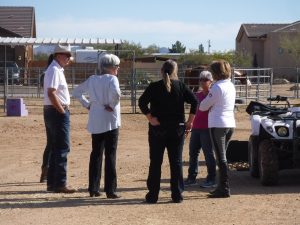
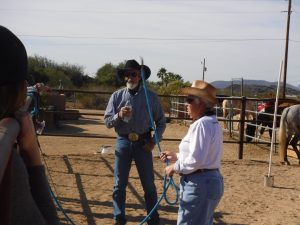
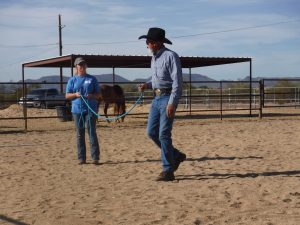
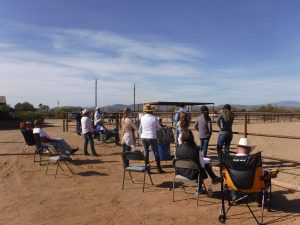
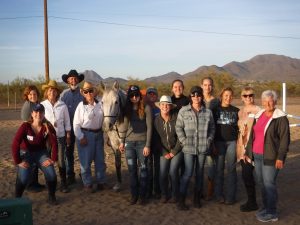
    Thank you to Silver Stables, Phoenix, AZ for hosting the first USMMA regional event!   More of these are planned around the country in 2017.

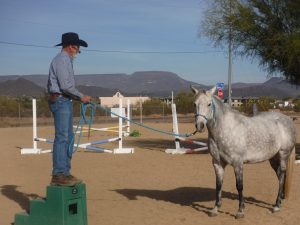
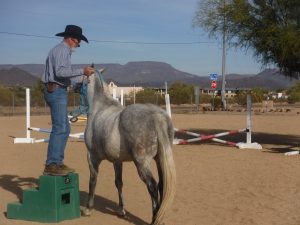
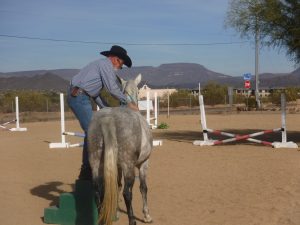
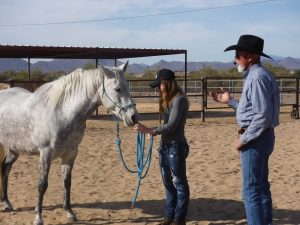
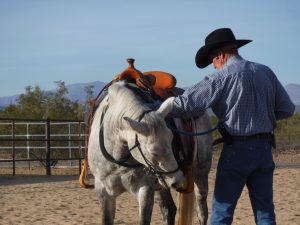
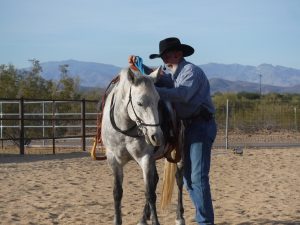
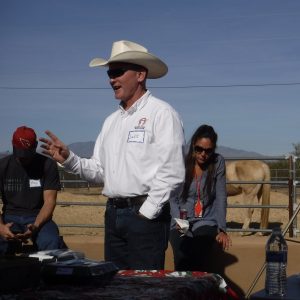
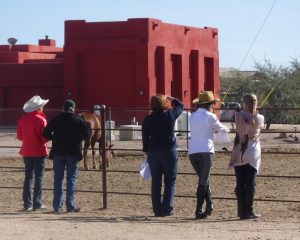
    USMMA President Jeff Bosley welcomed the members and Silver Stables students.   Members came from AB, AZ, NM and TX to attend a Ned Leigh Symposium “The Discovery Channel to Your Horse”.   Key things to remember:

    1. Find-feel response
    2. Muscle movement demonstrates intent
    3. Pressure causes resistance
    4. Contact causes awareness
    5. A goal should never come before the process to achieve the goal
    6. Worry about doing the wrong thing IS the wrong thing.
    7. The slower you ask a command, the lighter the response becomes.
    8. Be interested enough to teach your horse and it will be interested enough to learn.
    9. Every command has a purpose.  Know why before asking!
    10. Leadership is the foundation of relationship.

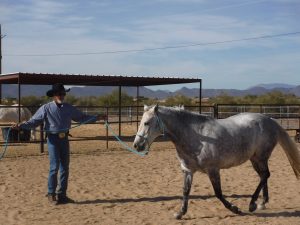
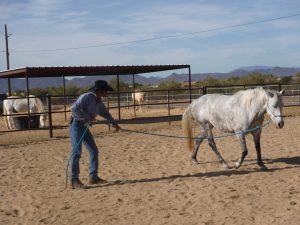
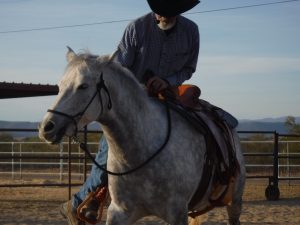
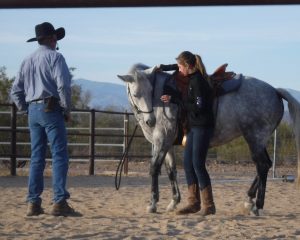
    Photos from the day!

    (p.s.  The demo mare is not a Marchador.   We had a few for Ned to use, but he wanted the “greenest” one on the ranch.  This mare had just come in for training, so he used her to show how horses would learn)

  • Getting to know my Marchadors – James Harvey photos

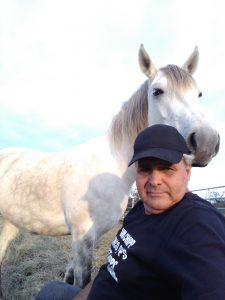
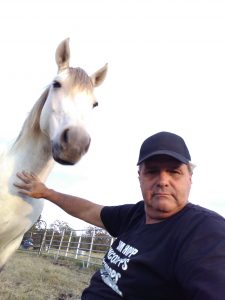
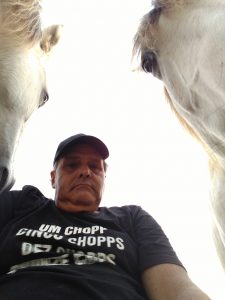
    James has owned his 2 Marchadors mares for a few years, but just recently brought them home from boarding and training. Now he is sitting out with them every day getting to know them and enjoying every minute.

    Here are his photos! The Marchador mares are full sisters: Flying Oaks Bright Star and Flying Oaks North Star.


  • Laurie Klassen awarded USMMA Show Subsidy

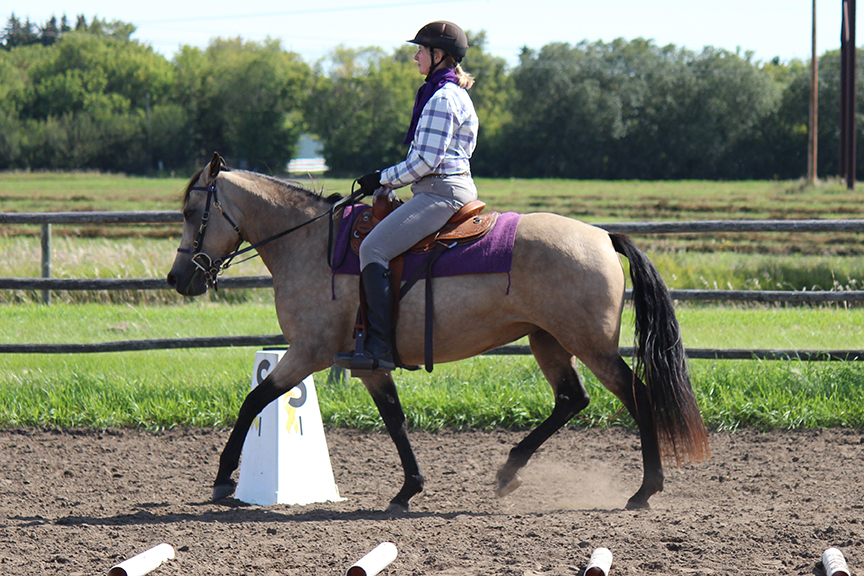
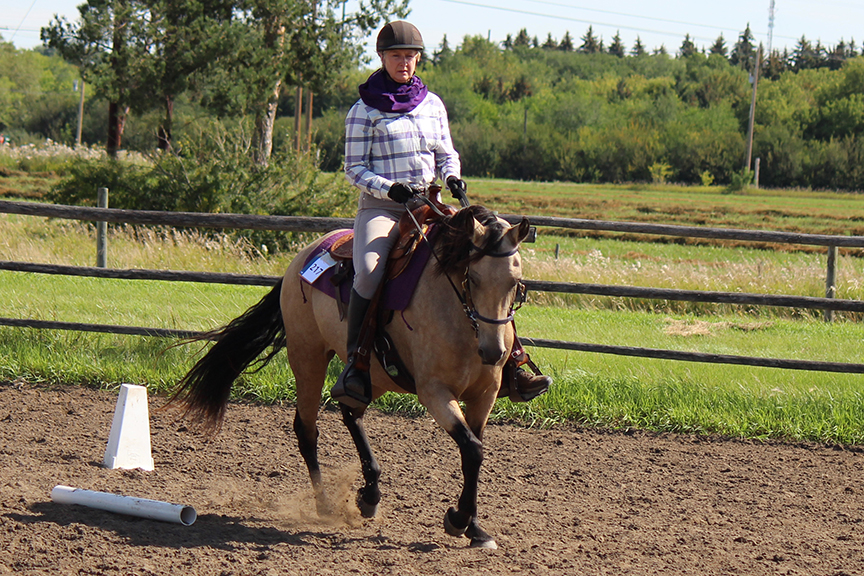
    Laurie Klassen of SK, Canada, riding Joia-Norte was awarded the USMMA Show Subsidy for her preparation and participation in Cowboy Dressage Clinic and Show.  It was their first venture into this discipline.

    Take a look.  Congratulations to Laurie and Joia!unknown-1 unknown

  • Shannon Ford Art Poster Raises Money for Marchador Horses in Need

    13726713_1076779372398869_1116581590355327035_n

    US orders:   With your donation of $15, we will send you this fine poster of a magnificent Mangalarga Marchador suitable for framing!   Shipping and handling is $5 so the total charged is $20 for one poster.   You can order 3 posters for $50.

    International orders:  With your donation of $15, we will send you this fine poster of a magnificent Mangalarga Marchador suitable for framing! Shipping and handling is calculated by country.

    The funds collected will be allocated to a fund for Marchador Horses in need.  Because this is a fund-raiser, you can also contribute more.

    Limited quanties available!   The poster is on high gloss paper and is a copy of an original painting by Shannon Ford.  The horse depicted is her young stallion Canadian Regente in vibrant colors.   For any art or Marchador afficiando, this is a great piece to decorate your walls!   Measures 12 x 18.

    You can order yours today using the Paypal button below or send a check to Lynn Kelley, 10487 E Rising Sun Dr, Scottsdale, AZ 85262 who is distributing the posters.

    Thank you Shannon!


    Shannon Ford Art Poster


    Meet Shannon Ford (bio from her website)

    Shannon Ford is a natural born artist and an animal lover since childhood, Shannon Ford was born in Regina Saskatchewan, totally enchanted by the natural world. She was raised on a farm west of Calgary where she grew up loving Art and knowing horses, cattle and wildlife.

    Shannon paints in both her Studios in Alberta, and in BC where she and her sweetheart Denis breed Mangalarga Marchador horses.

    Best known for her intuitive contemporary painting style and her use of her hand made precious and semiprecious gemstone powers, Shannon gives credit to her intuition, imagination and dreams in guiding her painting process.

    Shannon’s collectors value most the unique way her paintings appear well drawn and technically accurate from a distance while being free flowing, naturally abstract and infused with multiple colours when viewed from close up.

    She binds her love for sculpture and gemstones with her love for painting by incorporating her own handmade precious and semiprecious gemstone powders (and sometimes even cut gemstones and 24 Karat Gold or Palladium) to create paintings with a unique quality of surface, light and colour; capturing more deeply the true essence and beauty of the subject she is painting.