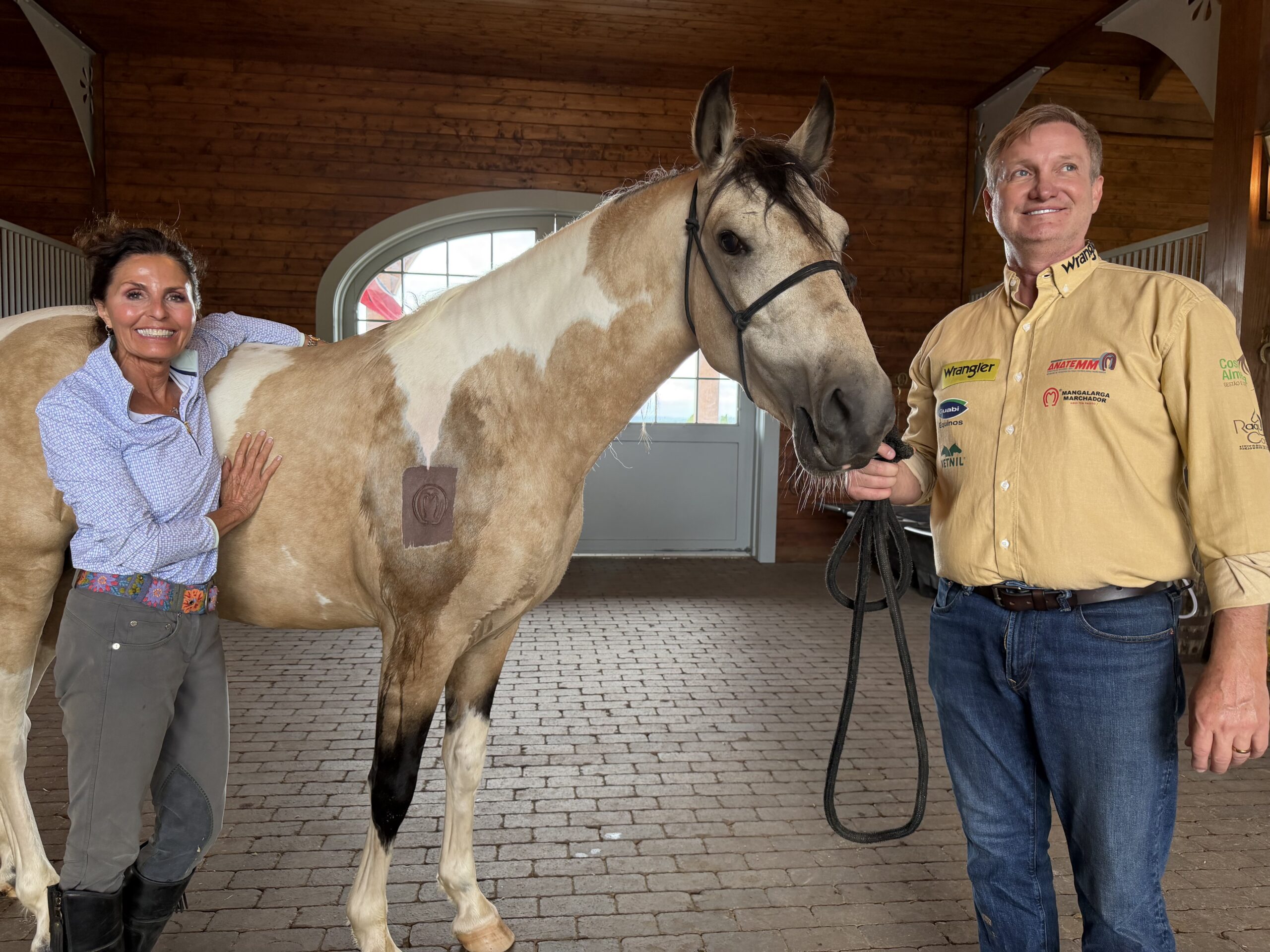
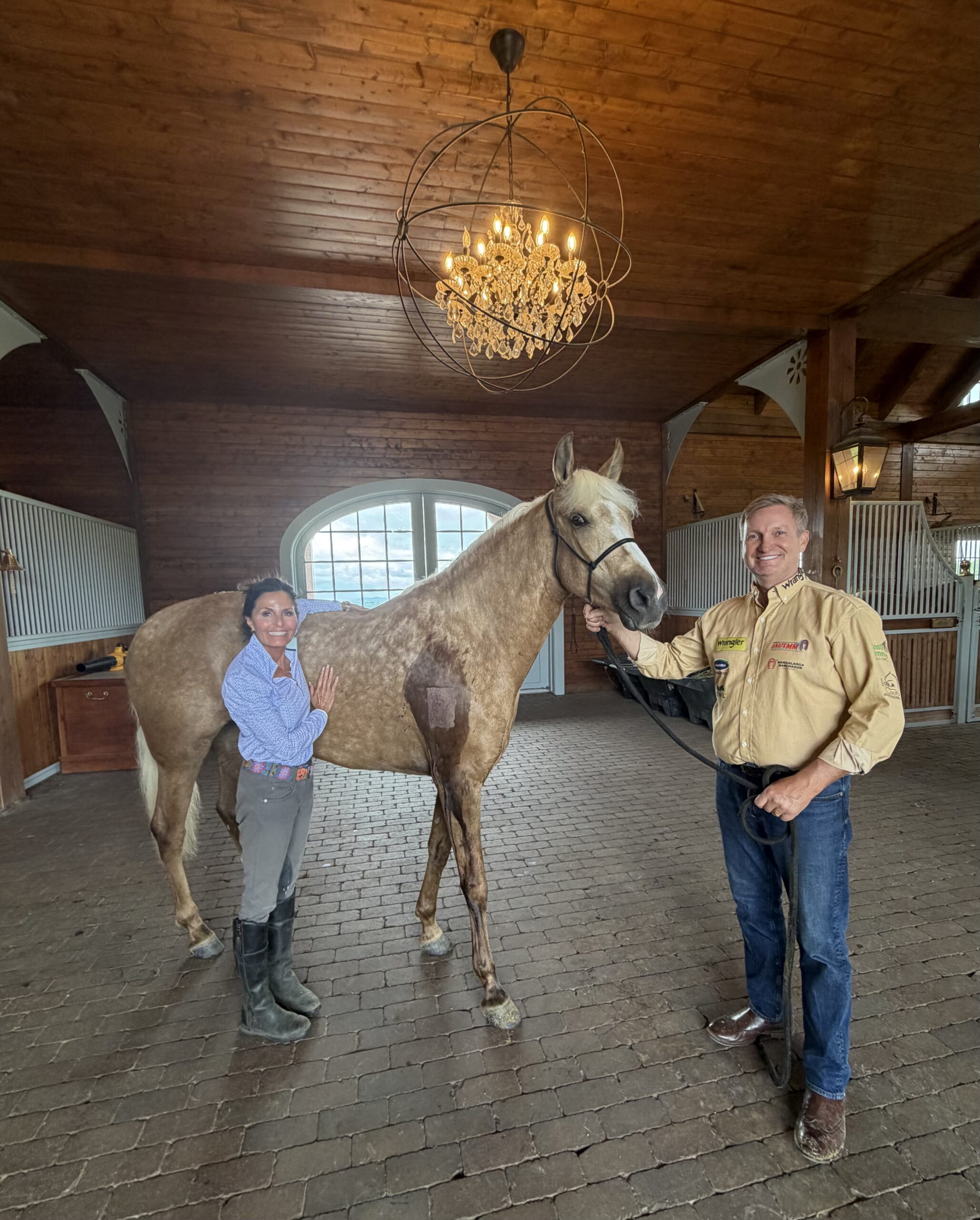
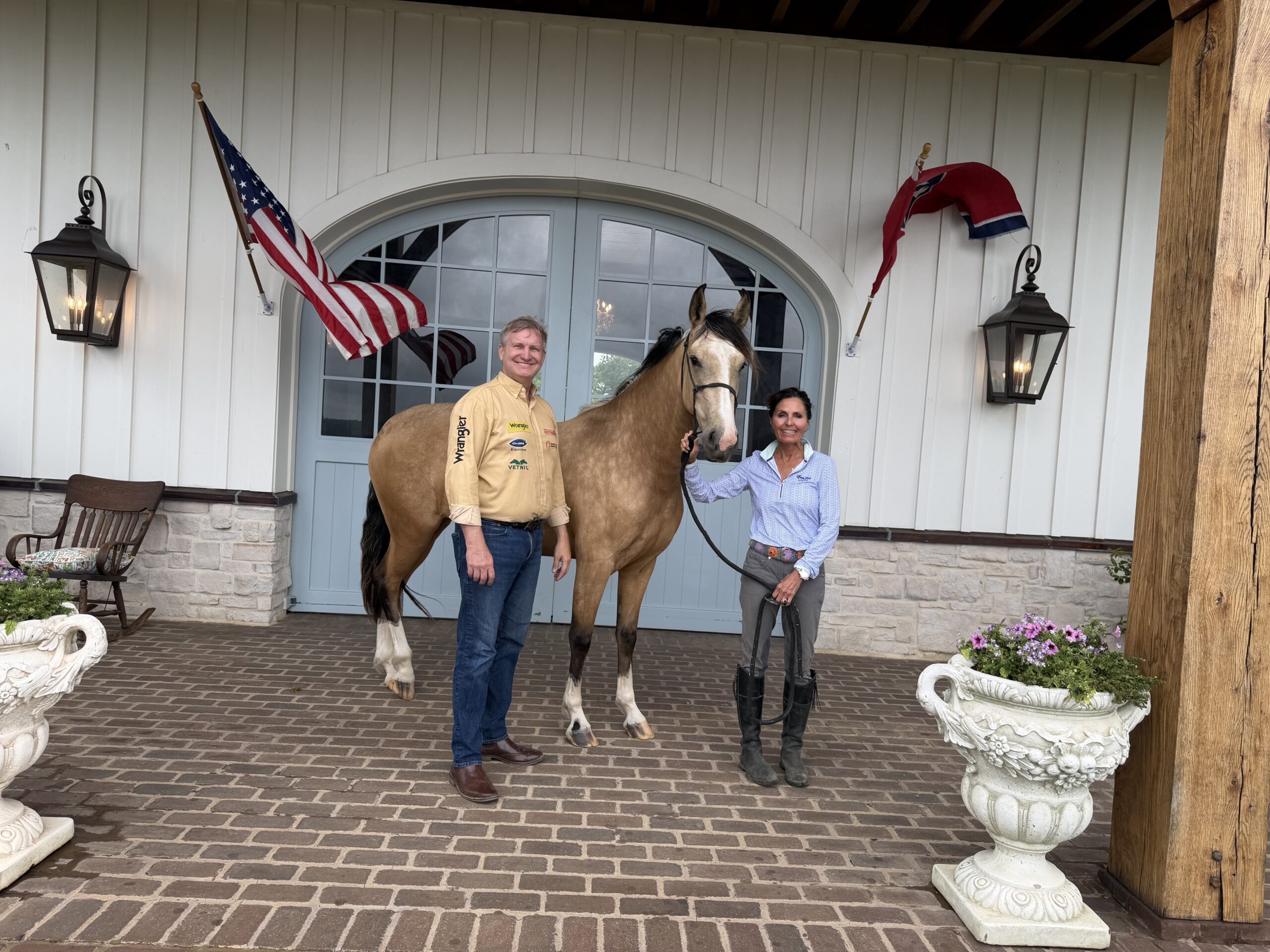
Photos submitted by the owners and breeders. Only some are shown here. At Saint Horse, photographer was Robyn Baker Foster. Thank you for sharing
The second 2026 ABCCMM inspection took place in Tennessee, South Carolina and Florida, starting late May and running into June.
2026 is a banner year for the Mangalarga Marchador breed, with many new foals adding to our population. 26 foals and horses were inspected by Dr. George Vilar, from the ABCCMM.
The journey to full registration of a Mangalarga Marchador is an exhilarating process, with a rigorous two stage inspection system mandated by the ABCCMM. The process helps to safeguard the MM breed standard. The first “provisional” happens at an early age and checks for genetic defects that would make the foal not eligible for registration. It continues by documenting unique markings and whorls, collecting DNA for parental verification, and microchipping the young foal —an essential foundation for its future. The foal gets recorded in the ABCCMM provisional book. The book for foals is 1 for males and 2 for female.
As we move forward, the second “definitive” inspection takes place after the horse turns three and has undergone training under saddle. This stage is where the true potential of each horse is assessed, as they are evaluated through both ridden and conformation tests, all aligned with the Mangalarga Marchador breed standards. Stallions need a higher score than mares to enter the breeding books. The books for breeding animals is 5 for stallions and 6 for mares. Geldings can be inspected, needing a lower score than a breeding animal to pass, but their book is C – for castrado. When the horse passes, the final step is to brand the horse with the trademarked ABCCMM horseshoe M brand.
This inspection process fosters an environment of learning and camaraderie among breeders and owners. We encourage you to attend an inspection happening in your area!
Here are the farms that participated in this inspection:
Daisy’s Folly, TN
CC Bellandi, FL
Paraiso das Palmeiras, FL
Family Silva’s, FL
Vovo Pedrinho, FL
Manna do Ceu. SC
Monarch Marchadors, SC
Saint Horse, SC
Vovo Pedrinho, SC
Congratulations to all! The photos are fabulous! Dr. George was impressed with the quality and the preparation of the foals and the riding horses.
Attached is – The 2021/2022 USMMA Breeder Directory.
The Breeder Directory has full information on the USMMA Members who are also Marchador Breeders. These breeders may or may not have Marchador horses for sale all of the time, but they represent a wealth of information about the breed and are very happy to share their knowledge with others. Visitors are welcome too.
We would like more people to learn about and own Mangalarga Marchador horses! Spread the word and feel free to share this list with others!
Best regards,
Jeff Bosley, USMMA President
Attached is a pdf file of the directory. The pdf file is sorted first by Country and State. Within state, it’s alphabetical by farm name.
Frozen Semen and Embryo Importation – by Flavio Tavares
In August 2019, I wrote to “Marchador Quarterly (Issue Nine)” talking about my development project for the Mangalarga Marchador breed in the United States. In addition to an ABCMM representative office, a frozen genetic material trading company would be operating, offering frozen semen and embryos to the American market.
Because of high operating costs and health barriers, the breed’s export flow around the world has drastically decreased since 2004 (see table below). For these reasons, frozen genetic material has become the best option to overcome these barriers and has the best cost-benefit ratio, to increase the volume of supply of the MM breed in the USA and in other markets where our Marchador is sought.
MM export table – US on left and Europe on right (biggest markets)
Year
Total
#MMs US
M
F
G
S
#MMs Europe
M
F
G
S
2001
39
30
11
18
1
9
1
5
3
2002
2
2
2
2003
4
1
1
3
1
2
2004
33
22
10
11
1
6
3
3
2008
3
3
1
2
2009
3
3
2
1
2010
9
9
8
1
2011
11
11
8
3
2012
6
1
6
2
4
2013
3
3
1
2
2014
0
4
2018
3
3
2
1
2019
1
1
1
1
117
62
24
33
5
5
50
23
19
8
0
(Caption: M males / F females / G geldings / S frozen semen)
In 2019, I started the administrative process at Brazil’s Agriculture Department, to work together with the FDA in the USA to obtain a bilateral agreement for the production and export of frozen equine embryos.
In August 2020, we were successful and this Bilateral Agreement was established between the countries, and since then, I have structured the operation in an objective way. I made a process of adjustment of my Reproduction Center to meet the sanitary requirements of this agreement, I selected the animals for the project, and assembled a highly qualified technical team, and so we started to produce semen and embryos with the highest technology.
It is noteworthy that my Center, located in Rio de Janeiro, was the first Equine Reproduction Clinic in Latin America, founded in 1987. We already had the expertise in semen freezing and embryo transfer, as we were the pioneers in Brazil of use of these biotechniques in the MM breed. However, due to the advancement of this technology, we set up a team with specialist veterinarians in this segment. The technical team is composed of Dr. Renato Rezende Bergvist and Dr. Rafael Goretti, both with extensive experience in the use of these techniques, working in Brazil and the United States.
Flávio Tavares, and his MM Frozen Genetics TeamRafael GorettiRenato Bergvist
We went to work, producing vitrified embryos and frozen semen, and carrying out fertility tests. We achieved great rates, which makes me confident to offer to the American market in the next reproductive season (2022), embryos from crosses with consistent genetics of gait and breed features. Marcha Batida and Marcha Picada, from breeders and families, who produce truly genuine movements, beauty, docility and racial expression. We will offer and breed exceptional saddle horses, genetics and future breeding stock.
I remember that in that article, I mentioned the fertility of frozen embryos, which varied in the world literature in the range of 35%. So, even though our team is getting better results, we use this reference as a base, and for each crossing, we will have at least 3 identical embryos, guaranteeing the delivery of the commercialized embryo.
Below is the list of the mares and stallions that make up this work, reinforcing that the selection was made with the aim of using animals with proven genetic consistency for the production of animals that, in addition to the quality mentioned above, become excellent saddle horses.
Table of horses
MARES_Marcha batida
Born
Color
Sire
Dam
Avenca do Porto Palmeira
14/10/2011
PP
Extrato do Minatto
Cósmica do Rebanho
Balada do Porto Palmeira
29/11/2012
B
Extrato do Minatto
Polka do Porto Palmeira
Carioca do Porto Palmeira
17/11/2013
C
Extrato do Minatto
Vidraça do Porto Palmeira
Jocasta do Santo André
25/12/2012
C
Carvão da Selva Morena
Sofia do Porto Palmeira
Luna do Santo André
15/07/2013
P
Extrato do Minatto
Roleta do Porto Palmeira
Luneta do Santo André (HMZ)
28/11/2013
PP
Uriço do Porto Palmeira
Kósmica Jocaman
Madona da Pedra Verde
20/12/2008
C
Favacho Único
Angelina do Fá
Máfia da Pedra Verde
25/11/2008
C
Favacho Único
Iraquiana da Pedra Verde
Moratória do Rebanho
01/10/2008
P
Beline L.J.
Jogatina JB
Salvaterra Vista Alegre
29/10/2013
P
Requinte do Tucunaré
Ondina Vista Alegre
Sonhada do Porto Palmeira
22/02/2006
C
Cabuçu da Selva Morena
Pérola Paredão
Tirana Dazelina
22/04/2009
PP
Thor Kafé da Nova
Queluz do Conforto
Zapata de Papucaia
01/10/2008
T
Cabuçu da Selva Morena
Rede do Porto Palmeira
Stallions_Marcha Batida
Nasc.
P
Pai
Mãe
Corsário do Porto Palmeira
30/11/2013
CP
Extrato do Minatto
Valesca do Porto Palmeira
Lugano do Vale das Águas
15/03/2016
PP
Pajé do Yuri
Brisa da Lua Prata
Requinte do Tucunaré
09/02/2006
CP
Hino Kafé
Madrugada PFG
Ultimato do Conforto
12/11/2007
T
Jogo J.B.
Silueta do Berma
Mares_Marcha Picada
Nasc.
P
Pai
Mãe
Badalada da Bela Joana
28/12/2005
T
Herdade Logus
Herdade Bacana
Dominância do Conforto
28/12/2013
C
Trilho da Zizica
Glória dos Mares
Ella do Cavaleiro
09/02/2011
C
Elfo do Porto Azul
Paola do Farol
Exibição da Pedra Verde
11/11/2001
C
Favacho Único
Aguia da Santa Terezinha
India da Calciolândia
18/10/2012
C
Nero da Calciolândia
Moda da Calciolândia
Jarina da Calciolândia
03/03/1996
C
Cadilac da Calciolândia
Dracena da Calciolândia
Jóia da Marcha GGT
29/01/2014
C
Narciso Marca F
Fama da Marcha
Marota da Gironda
25/10/2008
B
Goleiro da Gironda
Serpente da Gironda
Reprise da Calciolândia
30/09/2001
A
Natal de Guarantã
Araçatuba Xara
Seresta N.L.J.
28/04/2011
T
Elfo do Porto Azul
Prima Donna N.L.J.
Stallion_Marcha Picada
Nasc.
P
Pai
Mãe
Feitor da Rodeio
12/12/2014
C
Aladim do Kelner
Juíza dos Anjos
Editors’ Notes
A = Alaza or Chestnut
AA = Alaza Amarillo or Paolmino
B – Baia or Buckskin
C = Castanha or Bay
CP – Castanha Pampa or Bay Pinto
P = Preto or Black
PP = Preto Pampa or Black Pinto
T = Tordilha or Grey
Our website www.marchadorfrozen.com will be online in December, containing all the information about our products (semen and embryos), with photos and videos. We’ll also feature informative content about the breed, events and trends to keep US breeders up to date.
The semen doses will be sold directly, and the embryos will be exclusively inoculated by our team, which will arrive in the US in early March 2022.
We will guarantee the products born alive (with 15 days of life), both in the bill of sale for semen and embryos. And also guarantee gait at 3 years, when the animals are definitively registered. Unprecedented guarantee in the MM breed.
Furthermore, taking advantage of the high quality of our donors, we will be producing mule embryos (Donkey x mares) with a view to producing “boss” mules and donkeys, as they say in Brazil. We chose a donkey from the “Catuni” farm, which is one of the pillars of the march in the MM breed. We are also going to market semen from this donkey.
In other words, Marchador’s Frozen Genetics, will start its activities in the United States in the next breeding season, with abundant high quality material, aiming to serve US breeders, with quality, transparency and guarantees.
Images
Ultimato do Conforto, (Jogo JB x Silueta do Berma)Lugando do Vale das Aguas – homozygous (Pajé do Yuri x Brisa da Lua Prata)Requinte do Tucunaré, (Hino Kafé x Madrugada PFG)Avenca do Porto Palmeira, (Extrato do Minatto x Cósmica do Rebanho)Feitor da Rodeio, (Aladim do Kelner x Juíza dos Anjos)
Submitted by Flávio Tavares, Veterinarian, DMV, Owner of Center of Reproduction Animal, Breeder ABCCMM 23937-2, Chairman ABCCMM of Development and Foreign Trade Commission and Member of Sectorial Equideoculture Council of Agriculture Ministery Brazil
Laura Patterson Rosa, DVM, Brazil, is a graduate student pursuing her doctorate at UF while researching gait genetics.
The Brooks Equine Genetics Lab at the University of Florida has a new study that continues to research the genes, or combination of genes that might influence gait. Previous studies have focused on other breeds, this study focuses on Brazilian gaited breeds, with the main focus on the Mangalarga Marchador.
Here is some background from their website:
Have you ever asked yourself why do some horses gait? Horses are, indeed, the only known species of mammals that has such a wide variation in locomotion patterns. The gait is influenced by several factors: conformation and neurobiology, and to some extent environmental factors – such as human intervention in the form of shoeing and training. Each of the physiological aspects is influenced by other numerous components. The conformation by the bone length and thickness, muscle fiber type and joint angles. Types of nerves, presence and amount of calcium and potassium transmitters and synapse receivers control the neurobiology.
Several genes affect each of these components is therefore unlikely that a single gene is responsible for gaiting, but a combination of specific genes and their alleles. And in order to discover which genes are responsible for gait in horses, we need gaited horses! The goal of this study is to identify which genes predispose horses to gait, when compared to trotting or pacing horses. Our focus is mainly on the Mangalarga Marchador, but any Brazilian gaited breed is welcome. And we need hundreds and hundreds of horses; the more horses that participate, the more successful our study will be.
You can help by submitting information and DNA from your Marchador!
For more information on the Brazilian Breeds gaited study, please follow this link to download the gait study forms needed to submit DNA on your Mangalarga Marchador!
Gaia made history at 11:00 p.m.October 27, 2012, becoming the first MM foal born in the US using imported frozen semen from Brasil. A labor of love, our dream was realized when Agro Maripá collected and exported the first frozen MM semen from 3 of his stallions in Brasil. Our continued thanks to Agro Maripa!
Gaia is the product of Oma de Maripa and Brasilia do Summerwind. She was reserved by Dr. Adrienne C. Scheck of Scottsdale AZ and with SW Future Foal retaining breeding rights to her to ensure her genetics are carried forward in the U.S.
All of us are thrilled with her!!!!!
Her name Gaia was selected by Adrienne for a number of reasons. Gaia (“guy-a”) is the goddess or personification of Earth or Mother Earth (the Greek common noun for “land” is ge or ga) in pre-Olympian Greek mythology. The Gaia hypothesis proposes that organisms interact with their inorganic surroundings on Earth to form a self-regulating, complex system that contributes to maintaining the conditions for life on the planet.
We met the precious cargo at Scottsdale Equine Reproductive Center!
In 2011, we were unbelievably excited to receive the first shipment of frozen semen exported from Brasil. Ho-hum, you say. It happens all the time. NOT! We had worked for over four years to see this happen. There were two main issues.
In Brasil, each breed is regulated by the Ministry of Agriculture. For this to work, the ABCCMM had to modify its registration regulations, which had previously not allowed the use of frozen semen. Then the Ministry of Agriculture had to create the rules for exportation for the MM and approve veterinarian clinics for collection and exportation. To our knowledge, there are only 2 clinics in Brasil that have been approved so far.
Ximoio de Maripa semen arrived in 2011 from Agro Maripa! He is pure blood Abaiba of very old genetics.
The second is that there is not much demand for frozen semen in Brasil. With so many horses and land, often the preferred method of breeding is still live cover. For us to get Brasilian Marchador semen, the breeder needed to want to do this for us – for the good of the Marchador breed around the world.
Enter Mr. Marcelo Baptista, owner of Agro Maripa who fulfilled our dream. Agro Maripa collected and shipped 3 Maripa stallions of excellent quality and impeccable lineage to us in March 2011.
Talisma Kafe, from Haras Elfar, is a stallion whose semen has been collected and we are working through the importation process for 2012
Frozen semen (and later frozen embryos) is very important for the future of the Marchador breed here in the U.S. Imported frozen semen adds many things:
Diversity – new bloodlines, new individuals to the North American gene pool.
Quality – these stallions are first-rate individuals, champions in their own right and proven producers. Often not for sale, frozen semen offers a way to bring their blood here.
Excitement – it is exciting to be able to have a larger catalogue of beautiful Marchador stallions to choose from.
Today, there are 13 USMMA registered breeding stallions in North America. We froze La Paz Jivago (100 breeding doses) before gelding him for owner Rox Rogers.
For us the diversity and quality were the key items. The excitement is just an added bonus! We could have an immediate boost in quality in one generation. For diversity, one could argue that we are okay there for now. Because we are fortunate to have many breeding stallions here in the U.S., enough to breed the mares and cross-breed the resulting next generation. But what about the third, fourth and fifth generation?
We may not be alive to see those MM foals born, but we are doing this for them. Continued importation is the key for maintaining and improving the quality of the Mangalarga Marchador breed here. We plan to import more semen, from different bloodlines and make it available – a semen bank – either through the SW Future Foal franchise or the M Foundation.
Connie Claire with La Paz Jivago foal DaVinci do Summerwind. DaVinci was the first MM foal born using frozen semen in the U.S. We are expecting a 2012 foal from Oma de Maripa using his frozen semen!
We would encourage MM breeders to freeze their stallion’s’ semen here if it’s viable (before they are gelded or get too old). Perhaps your great grandchildren would like to have a foal from him someday!
Frozen semen lasts forever. It is a great investment in the future of the Mangalarga Marchador breed!
Epopeia do Vale da Prata and her grandson Oxum, imported by Regal Legacy. Shown here at age 22.
The IMPORTERS is a series of articles about the history of the Marchador breed coming to the U.S. and the breeders who brought them in. This is the fifth installment of the series — Regal Legacy and Premier International LLC. The bloodlines highlighted in this article are many.
If you click on this link below (it will take 2 screens), the full article is available for viewing. Enjoy!
The IMPORTERS is a series of articles about the history of the Marchador breed coming to the U.S. and the breeders who brought them in. This is the fourth installment of the series – Cascade Marchadors and Flying Oaks Ranch. The bloodlines highlighted in this article are Abaiba and Herdade.
If you click on this link below (it will take 2 screens), the full article is available for viewing. Enjoy!
A beautiful new Mangalarga Marchador foal born! Imported mare Bella (Elba Cruzalta) has some special bloodlines and this is her first! The new colt is nicknamed Tigre because of the stripes until the owners choose his real name. Sire is La Paz Jivago. Congratulations to Keith and Alice Mosing, TX.
The USMMA lost 2 great mares this year: Summerwind’s Chanel de Miami 1996-2011 and 4 Seasons’ Tapixaba do Vale Vermelho 1998-2011.. They left us before their time and the only saving consolation is the foals they left behind them.
Chanel de Miami, USMMA 0000001
Chanel had 5 foals: Artemis and Enya will stay with Summerwind. The others are Destiny do Summerwind in TX and Caesar do Summerwind in CA. Her first foal Coco de Miami is deceased, born in FL.
The kind soft eye of the Marchador
Tapixaba had 4 foals, all pintos! 2 foals Tapi’s-Pinga and Ze Travao are with 4 Seasons. The others are Casablanca do Premier in OR and 4 Seasons Edipo is deceased.